

Data analytics services in Nigeria are separating the businesses that are growing from the businesses that are guessing. In 2026, the Nigerian business landscape has never been more competitive, more unpredictable, or more full of opportunity for the businesses that know how to read it correctly.
The difference between the Nigerian businesses winning in their markets right now and the ones struggling to keep up is not always product quality, pricing, or even customer service. Very often, the difference is data. The winning businesses know things their competitors do not know. They know which customers are most likely to buy again. They know which products are most profitable. They know which marketing campaigns are generating revenue and which are wasting budget. They know when demand is about to spike before it actually spikes.
They know these things because they invested in data analytics. And the businesses that have not are making every major decision based on gut feeling, incomplete information, and hope.
This article is going to show you exactly what data analytics services are doing for Nigerian businesses right now, why the gap between data-driven businesses and gut-feeling businesses is widening every single month, and what you need to do to make sure your Nigerian business is on the right side of that gap.
What Are Data Analytics Services and Why Do Nigerian Businesses Need Them in 2026?
Data analytics services cover the full process of collecting, cleaning, analyzing, and interpreting business data to extract insights that drive better decisions and better outcomes.
Every Nigerian business generates data every single day. Every sale, every customer interaction, every website visit, every social media engagement, every delivery, every failed transaction, every support ticket. All of it is data. The question is not whether your Nigerian business has data. It does. The question is whether you are doing anything useful with it.
Most Nigerian businesses are not. Their data lives in disconnected spreadsheets, buried in accounting software, scattered across platforms that do not talk to each other, and summarized in monthly reports that arrive too late to change anything.
Data analytics services change this entirely. They build the infrastructure, processes, and tools that transform your raw, scattered data into clear, actionable intelligence that tells you exactly what is happening in your business, why it is happening, and what you should do about it.
At FemX Tech, our data analytics services cover five core areas that together give Nigerian businesses complete visibility and control over their business performance:
- Business Intelligence and Dashboard Reporting: Real-time visibility into every metric that matters to your business
- Data Strategy and Consulting: Building the foundation for a data-driven business culture
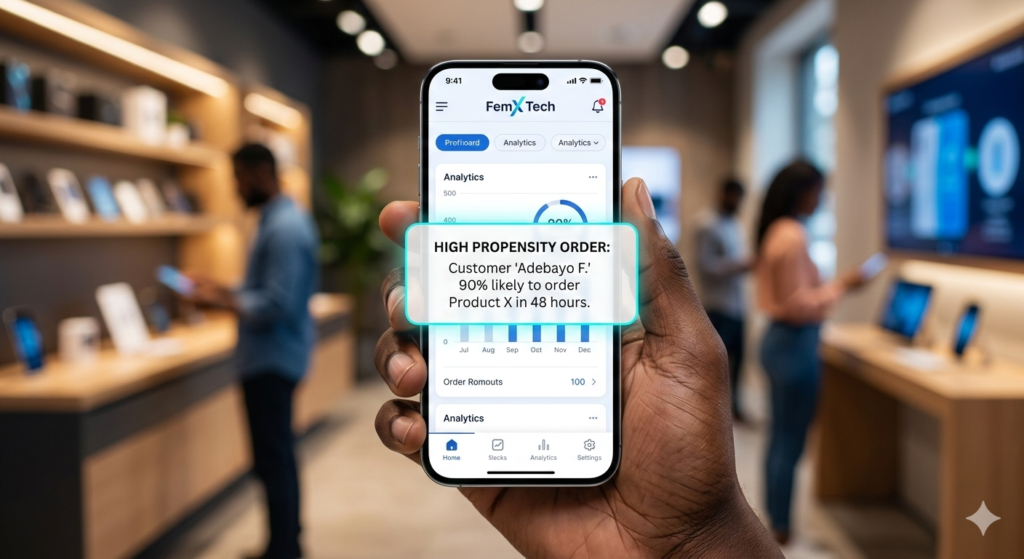
- Predictive Analytics and Machine Learning: Using historical data to predict future outcomes with remarkable accuracy
- Data Integration and Pipeline Engineering: Connecting all your data sources into a single reliable source of truth
- Customer and Market Analytics: Understanding your Nigerian customers deeply enough to predict and influence their behavior
The Harsh Reality: Most Nigerian Businesses Are Flying Blind in 2026
Here is an uncomfortable truth that most Nigerian business owners recognize the moment they hear it. The majority of major business decisions being made by Nigerian companies right now are based on incomplete, inaccurate, or outdated information.
The sales manager who reports that last month was good without knowing which products drove the growth, which customers accounted for the majority of revenue, or which channels brought in the most valuable leads is not managing sales. He is describing the past without understanding it.
The marketing team spending budget across Instagram, Google, radio, and events without knowing which channel is generating the highest return on investment is not marketing strategically. They are hoping something works and spreading the risk.
The operations director who does not know the real cost of serving different customer segments, which delivery routes are most profitable, or where the biggest inefficiencies in the supply chain are hiding is not optimizing operations. He is maintaining the status quo and calling it management.
This is not a criticism of Nigerian business professionals. It is a description of what happens when businesses operate without proper data analytics infrastructure. And it is costing Nigerian businesses enormous amounts of money every single month.
8 Ways Data Analytics Services Are Making Nigerian Businesses More Money in 2026
1. Knowing Exactly Which Products and Services Are Actually Making You Money
Not all revenue is equal. A Nigerian business generating 10 million Naira per month in revenue might be making most of its actual profit from 20% of its products while the other 80% barely cover their costs or actively lose money.
Without data analytics, most Nigerian businesses never discover this until it is too late. With proper business intelligence and profitability analysis, they discover it immediately and can make the strategic decisions that dramatically improve margins without necessarily growing revenue at all.
Data analytics tells you not just what you are selling but what is actually worth selling. For Nigerian businesses operating in tight margin environments, this insight alone can transform financial performance.
2. Predicting What Your Nigerian Customers Will Do Next
Predictive analytics is one of the most powerful and most underutilized tools available to Nigerian businesses today. Using historical customer data and machine learning models, predictive analytics can tell you which of your current customers are most likely to buy again in the next 30 days, which are at risk of churning, and which are ready to upgrade to a higher value product or service.
For a Nigerian eCommerce business, this means knowing which customers to target with retention campaigns before they leave rather than after. For a Nigerian bank or fintech company, this means identifying customers most likely to take up a new product before spending budget marketing it to the entire database. For a Nigerian healthcare provider, this means anticipating patient needs and reaching out proactively rather than waiting for patients to book appointments.
The Nigerian businesses using predictive analytics are not just reacting to what their customers do. They are anticipating it and acting first.
3. Stopping the Budget Leaks That Are Draining Your Nigerian Business
Every Nigerian business has budget leaks. Money being spent on activities, suppliers, processes, or campaigns that are not generating proportional returns. The problem is that without data analytics, most Nigerian businesses never find these leaks because they do not have the visibility to see where the money is going and what it is producing.
Data analytics finds the leaks. It shows you that the supplier you have been using for three years is costing you 15% more than market rate. It shows you that the marketing campaign generating the most impressions is generating the least revenue. It shows you that the product line consuming 30% of your warehouse space is contributing 5% of your profit.
For Nigerian businesses where every Naira counts, finding and fixing these leaks through data analytics can free up significant budget that can be redeployed into activities that actually grow the business.
4. Reducing Customer Acquisition Costs for Nigerian Businesses
One of the most direct financial impacts of data analytics for Nigerian businesses is the reduction of customer acquisition costs. When you know exactly which marketing channels, campaigns, messages, and audiences produce the highest value customers at the lowest cost, you stop wasting money on everything else and concentrate your budget on what works.
Nigerian businesses using data analytics to optimize their marketing spend consistently achieve customer acquisition costs that are 30% to 50% lower than competitors operating without this visibility. Over the course of a year, this difference compounds into a significant competitive cost advantage that is extremely difficult for data-blind competitors to close.
5. Improving Customer Retention in Nigeria’s Competitive Market
Acquiring a new customer in Nigeria costs between five and seven times more than retaining an existing one. Yet most Nigerian businesses invest the vast majority of their marketing budget in acquisition and almost nothing in systematic retention.
Data analytics changes this equation by giving Nigerian businesses the customer behavior insights needed to build effective retention strategies. It identifies the early warning signs of customer churn before it happens. It reveals what your most loyal Nigerian customers have in common so you can find more of them. It shows you the optimal timing and content for re-engagement campaigns that bring dormant customers back.
For Nigerian subscription businesses, SaaS companies, healthcare providers, and any business that benefits from repeat customers, customer retention analytics is one of the highest-ROI investments available.
6. Making Nigerian Supply Chains Dramatically More Efficient
For Nigerian businesses in logistics, manufacturing, retail, and eCommerce, supply chain efficiency is a primary driver of profitability. Data analytics transforms supply chain management from a reactive, gut-feeling discipline into a precise, predictive science.
Demand forecasting analytics tells Nigerian businesses exactly how much stock to hold and when to reorder, eliminating both the cost of overstocking and the revenue loss of stockouts. Route optimization analytics reduces delivery costs and improves delivery times across Nigeria’s complex road network. Supplier performance analytics identifies which suppliers are creating the most operational risk and cost, giving procurement teams the data they need to negotiate better or switch.
Nigerian logistics and supply chain businesses using data analytics are consistently outperforming competitors on cost, speed, and reliability, which are the three metrics their customers care about most.
7. Giving Nigerian Business Leaders the Confidence to Make Bold Decisions
One of the most underappreciated benefits of data analytics for Nigerian businesses is the confidence it gives leadership teams to make bold, high-stakes decisions quickly.
The Nigerian CEO who wants to expand into a new city but is not sure which one, the sales director who wants to launch a new product line but is not sure which segment to target first, the CFO who wants to cut costs but is not sure where to start without damaging the business. All of these decision makers are limited not by their ambition or their capability but by the absence of the data they need to act with confidence.
Data analytics removes that limitation entirely. When the decision is backed by clear, reliable data, Nigerian business leaders can act faster, commit more fully, and execute more effectively than competitors who are still debating based on competing opinions and incomplete information.
8. Identifying New Revenue Opportunities Your Nigerian Business Does Not Know Exist Yet
Perhaps the most exciting application of data analytics for Nigerian businesses is its ability to surface revenue opportunities that would otherwise remain completely invisible.
Market gap analysis reveals underserved customer segments in the Nigerian market that your business is positioned to serve. Customer lifetime value analysis reveals which customer segments are worth investing more in acquiring. Trend analysis reveals emerging demand patterns in the Nigerian market before they become obvious to every competitor.
The Nigerian businesses finding and capturing these opportunities first are not lucky. They are data-driven. And data analytics is the tool that makes it possible.
Data Analytics for Every Industry in Nigeria
eCommerce and Retail
Track conversion rates, customer lifetime value, basket sizes, return rates, and inventory performance in real time. Know which products, campaigns, and channels are driving revenue and double down on what works.
Healthcare and Hospitals
Improve patient outcomes, optimize resource allocation, reduce waiting times, and meet regulatory requirements with healthcare analytics built on secure HIPAA-compliant infrastructure across Nigerian hospitals and clinics.
Finance and Fintech
Monitor portfolio performance, detect fraudulent transactions in real time, forecast revenue, and meet CBN regulatory reporting requirements with financial analytics built for Nigeria’s banking and fintech sector.
Logistics and Supply Chain
Optimize delivery routes across Nigeria’s road network, reduce fuel costs, forecast demand, improve warehouse efficiency, and track performance across your entire supply chain in real time.
Agriculture and AgriTech
Track crop yields, monitor weather patterns, optimize supply chains from farm to market, and connect Nigerian farmers to buyers with data-driven platforms built for the agricultural sector.
Education and EdTech
Track student performance, identify learners at risk of dropping out, optimize content delivery, and measure learning outcomes across Nigerian schools, universities, and online learning platforms.
The Numbers That Show Why Nigerian Businesses Cannot Afford to Ignore Data Analytics in 2026
The business case for investing in data analytics services in Nigeria has never been stronger:
- Companies using data-driven decision making are 23 times more likely to acquire customers than competitors who are not
- Nigerian businesses with mature analytics capabilities report up to 20% higher operating margins than industry peers
- Predictive analytics reduces customer churn by up to 15% when applied consistently to retention strategies
- Data-driven marketing generates up to 8 times higher ROI than marketing without analytics
- Real-time business intelligence dashboards reduce the average time to business decision by more than 60%
- Organizations that invest in data analytics are 6 times more likely to retain customers year over year
For Nigerian businesses competing in increasingly crowded markets with tightening margins, these numbers represent the difference between growing and surviving.
Why Most Nigerian Businesses Have Not Yet Invested in Data Analytics and Why That Is About to Change
The most common reason Nigerian businesses have not invested in data analytics services is the belief that it is too expensive, too complex, or only relevant for large multinational corporations.
All three beliefs are outdated in 2026.
Data analytics tools and services have become dramatically more accessible and more affordable in recent years. Cloud-based analytics platforms, open-source tools, and experienced local analytics teams like FemX Tech have made professional data analytics services accessible to Nigerian businesses of every size, from growing SMEs to large enterprises.
The complexity barrier has also fallen significantly. Modern analytics dashboards are designed to be used by non-technical business users. You do not need a data science degree to understand a well-designed business intelligence dashboard that shows you exactly what is happening in your business in plain language.
And the relevance question is settled entirely by results. The Nigerian businesses that have invested in data analytics are generating measurably better outcomes than those that have not. The evidence is in their growth rates, their margins, their customer retention numbers, and their market share.
The question for Nigerian business owners in 2026 is no longer whether data analytics is relevant to your business. It is how much longer you can afford to compete without it.
How to Get Started With Data Analytics for Your Nigerian Business
Getting started with data analytics does not require a massive upfront investment or a complete overhaul of your existing systems. The right approach depends on where your Nigerian business is starting from and what decisions you most urgently need better data to support.
At FemX Tech, we start every data analytics engagement with a thorough assessment of your current data landscape. We identify what data you already have, where it lives, what is missing, and what quick wins are available before building toward a more comprehensive analytics capability.
For some Nigerian businesses, the most valuable first step is a simple business intelligence dashboard that consolidates your existing data into a single real-time view of your most important metrics. For others, it is a data integration project that connects disconnected systems and creates a reliable single source of truth. For others still, it is a predictive model that solves a specific high-value business problem like churn prediction or demand forecasting.
Whatever your starting point, the most important thing is to start. Because every month your Nigerian business operates without proper data analytics is another month of decisions made on incomplete information, budget spent on activities that may not be working, and opportunities missed that your data-driven competitors are capturing.
Work With a Data Analytics Company That Understands Nigerian Businesses
At FemX Tech, our data analytics services are built specifically for Nigerian businesses that are serious about using their data to grow. We combine global analytics expertise with a deep understanding of the Nigerian business environment, the data challenges unique to operating in Nigeria, and the specific insights that Nigerian businesses need to compete and win in their markets.
Whether you need a real-time business intelligence dashboard, a predictive analytics model, a data integration solution, or a complete data strategy from the ground up, we deliver analytics solutions that translate directly into better decisions and measurable business growth.
Explore our data analytics services, discover how digital marketing services can grow your Nigerian business online, learn about our custom software development solutions, or get in touch for a free consultation today.
